Eternity in a Glass Cube: The Archaeology of the Future and the Phenomenon of Laser Engraving in Optical Crystal
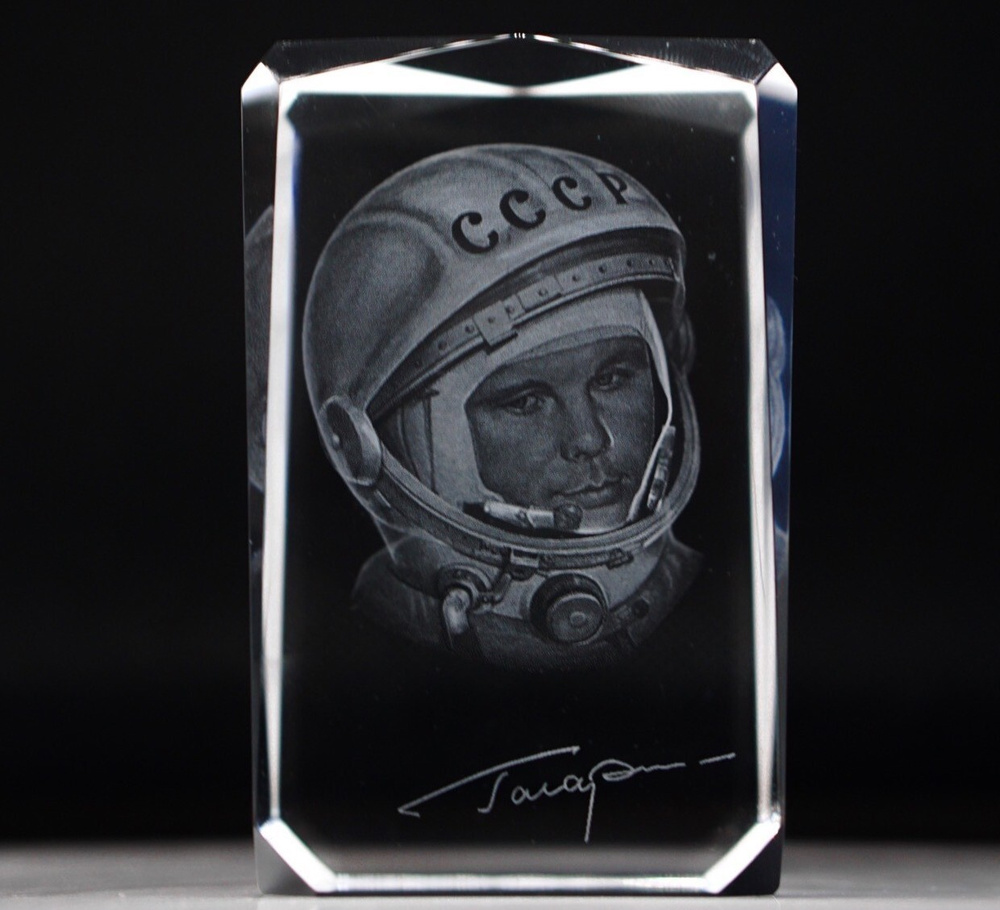
The paradox of modern material culture and the information age is that the storage media for the most valuable, humanity-critical information—server arrays, hard drives, solid-state drives, magnetic tapes, and paper—have catastrophically short lifespans. Magnetic media degrade and demagnetize within a few decades, paper disintegrates, and optical discs are prone to the decay of their polymer layers. Existing archival solutions require constant energy expenditure to maintain infrastructure and endless cycles of data migration. At the same time, the most trivial, mundane, and often absurd items of everyday life are made of materials capable of outliving human civilization itself.
When millennia from now, continents change their shapes, and only stratigraphical layers of concrete, plastic, and synthetic polymers remain of megalopolises, future archaeologists and paleontologists will encounter a completely new layer of artifacts—technofossils. And among the billions of tons of non-biodegradable trash, fragments of ballpoint pens with tungsten tips, and electronic residue, a special place will be occupied by optically pristine glass cubes with internal three-dimensional engravings.
Today, these heavy glass parallelepipeds are mass-sold in every souvenir shop in the world. Inside them, like flies in amber, are frozen detailed three-dimensional copies of commercial airplanes, the Eiffel Tower, the Egyptian pyramids, or virus molecules. The corporate sector annually produces millions of such cubes as employee awards, engraved with phrases like "Best Yogurt Manufacturer 2026," "Outstanding Sales Eagle," or joke nominations like the "Squirrel Award" for the most cluttered desk. From the perspective of our contemporary, this is a mass-produced, inexpensive product of the gift industry, often perceived as an ordinary dust collector.
However, from the standpoint of geology, deep materials science, and the archaeology of the distant future, this souvenir cube represents a practically perfect, indestructible time capsule. Thanks to the outstanding physical and chemical properties of optical borosilicate glass and the unique technology of sub-surface laser engraving, these artifacts will preserve units of our visual, architectural, and cultural information unchanged. They will lie in the earth, unaffected by decay, oxidation, or fading, until our distant descendants carefully extract them from excavations and exhibit them in museums in five, ten, or even a hundred thousand years.
This analytical report presents a comprehensive, multi-level study of the phenomenon of the souvenir glass cube. We will analyze the quantum physics of a laser beam penetrating a transparent material, the chemistry and thermodynamics of optical glass, the mechanics of microcrack propagation, and the historical perspective of glass degradation from the era of the Pharaohs to our days. Finally, we will consider the anthropological value of these objects and their direct technological connection to cutting-edge developments in the field of ultra-durable digital data storage.
The Physics of Trapped Light: The Mechanics of Sub-Surface Laser Engraving (SSLE)
The process of creating a floating three-dimensional image inside a solid block of glass is fundamentally different from traditional methods of material processing. It does not use the physical penetration of a cutter, drill, or abrasive; it does not employ inks, dyes, or chemical etchants. The image is formed exclusively by light using a technology known as Sub-Surface Laser Engraving (SSLE). In professional and colloquial environments, this technique is sometimes referred to as the creation of "bubblegrams" due to the characteristic spherical shape of tiny micro-fractures, visually resembling air bubbles frozen in ice.
The Interaction of Laser Radiation with a Transparent Medium
Traditional laser marking or cutting used in the industry typically relies on carbon dioxide ($CO_2$) lasers emitting in the infrared spectrum with a wavelength of about 10,600 nm. When a $CO_2$ laser beam hits glass, the long-wave infrared radiation is completely absorbed by the surface layer of the material. This causes rapid localized heating and thermal ablation—the glass on the surface cracks and vaporizes, leaving a frosted, rough trail. Fiber lasers, on the other hand, generate a beam that passes through transparent materials almost without interaction, leaving no trace at all.
To create a change inside the crystal array without damaging its surface, SSLE technology uses an entirely different class of equipment. The industry standard is solid-state diode-pumped solid-state lasers (DPSS), specifically neodymium-doped yttrium aluminum garnet (Nd:YAG) lasers operating at the second harmonic and emitting green light with a wavelength of 532 nm. Glass has an extremely high optical transparency for this wavelength, which allows the green beam to freely penetrate deep into the material.
The physical magic happens thanks to a complex system of focusing lenses. The laser beam passes through the surface with a relatively large cross-section, so the energy density at the surface is insufficient to break molecular bonds. However, the system's lenses are configured to converge the beam into a microscopic focal point precisely at a given depth (z-offset) inside the material. In this infinitesimally small area, the energy concentration increases millions of times.
A colossal local temperature gradient arises. The material at the focal point instantly absorbs energy via a multi-photon pathway (even though it is transparent to single photons), which leads to the formation of microplasma and extreme thermal stress. The rapid expansion of an incandescent micro-area inside the cold, rigid glass matrix causes a local micro-fracture—a tiny, precisely positioned crack measuring millionths of an inch is formed.
Image Formation and the Problem of Density
To create a meaningful object (for example, a corporate "Prism of Excellence" award), a laser cannot cut solid lines inside the glass, as a continuous fracture would simply split the entire block in half. Instead, the principle of pointillism is used: a pulsed laser generates tens, hundreds of thousands, and sometimes millions of individual microcracks. Specialized 3D modeling software (e.g., Cockpit3D) translates a virtual model into a coordinate cloud, controlling the mirrors of a galvanometer to position each "bubble."
When external lighting penetrates the finished cube, visible light hits these fractures. Because the refractive index in the fracture zone differs sharply from the refractive index of solid glass, light is intensely scattered in all directions. It is this scattered light that makes the cloud of microcracks visible to the human eye, creating the effect of a bright, white object floating inside the glass.
SSLE technology has fundamental physical limitations that directly shape the aesthetics and durability of souvenirs:
| Engraving Parameter | Physical Limitation | Impact on Visual Result and Preservation |
|---|---|---|
| Color Rendition | The laser acts thermally, changing the structure, but not the chemical composition. | Impossibility of creating color images; the engraving is always monochrome (white/frosted). |
| Grayscale | The size of the microcrack is fixed by the optics and the laser pulse energy. | The illusion of halftones is created entirely by changing the spatial density of dots (as in raster printing). |
| Upper Density Limit | Dots cannot be placed close to each other. | Occurrence of "clashes" or "crashes"—microcracks merge to form massive fractures. The image becomes unrecognizable; the crystal may crack. |
| Lower Density Limit | Too much distance between fractures. | The object looks dim, "ghostly," and barely visible in daylight. |
| Safety Margins | Focusing near the air/glass boundary causes macro-destruction. | The necessity of leaving a transparent buffer zone of at least 3 mm from the edges of the cube (X, Y, Z), ensuring the artifact's integrity. |
Because the image is physically burned as structural voids within a monolith's thickness, it cannot demagnetize, fade under ultraviolet exposure, or be mechanically erased. Its existence is limited only by the physical existence of the glass cube itself. And this is exactly where materials science takes center stage.
K9 Optical Glass: The Materials Science of Eternity
For a laser beam to consistently focus on a point the size of a millionth of an inch, the material must possess not just transparency, but perfect optical homogeneity. Regular window or bottle glass (soda-lime glass) is unsuitable for 3D engraving. It melts at low temperatures, is full of internal stresses, microbubbles, inclusions, and has uneven refractive indexes, leading to laser beam distortion.
Lead crystal, historically used for luxury glasses and chandeliers, is also unfit for machine engraving. It is too soft, and its matrix absorbs the laser's thermal energy too quickly and uncontrollably, causing the entire product to crack during processing.
This is why the absolute majority of quality souvenir cubes, award prisms, and crystal paperweights are made from a specialized optical material—K9 glass (often commercially referred to as "K9 crystal").
The Anatomy of Borosilicate Crown
K9 glass is a type of optical borosilicate crown glass. The letter "K" in the international nomenclature refers to the German word Krone (crown), and the number "9" denotes its specific position in classification tables, indicating that it is a lead-free material. In optics, glasses are divided into crowns (with an Abbe number $\ge 50$) and flints (with an Abbe number $< 50$). K9 has an Abbe number of 64.06, making it an outstanding low-dispersion crown glass.
The glass owes its unique properties to a strictly calibrated chemical composition. The classic K9 formula includes: silicon dioxide ($SiO_2$) — 69.13%, boron oxide ($B_2O_3$) — 10.75%, sodium oxide ($Na_2O$) — 10.40%, potassium oxide ($K_2O$) — 6.29%, barium oxide ($BaO$) — 3.07%, and microscopic trace additions of arsenic trioxide ($As_2O_3$) — 0.36%.
It is the presence of more than 10% boron oxide that categorizes this glass as borosilicate. First developed in the late 19th century by the German chemist Otto Schott (founder of the Schott AG company, which released glass under the "Duran" brand), borosilicate glass revolutionized science and industry. Replacing part of the alkali components with boron oxide drastically altered the thermal and mechanical properties of the silica network.
| Characteristic | Ordinary Glass (Soda-Lime) | K9 Optical Glass (Borosilicate Crown) | Fused Quartz |
|---|---|---|---|
| Main chemical composition | $SiO_2$, $Na_2CO_3$, $CaCO_3$ | $SiO_2$ (69%), $B_2O_3$ (11%), $Na_2O$, $K_2O$, $BaO$ | Pure $SiO_2$ (no fluxes) |
| Melting temperature | ~ 1000°C | ~ 1400°C - 1650°C | > 1650°C |
| Mohs hardness scale | ~ 5.5 | ~ 5.5 - 7.0 (scratches regular glass) | ~ 5.3 - 6.5 |
| Thermal expansion coefficient | High | Extremely low ($\approx 3 \times 10^{-6} K^{-1}$ at 20°C) | Close to zero |
| Thermal shock (ΔT) | Shatters at $\Delta T > 50°C$ | Withstands temperature drops up to 166°C - 170°C | Withstands extreme shocks |
| Optical properties | Average purity, greenish hue, distortions | Ideal transparency, refractive index 1.51630, bubble-free | Highest UV transmittance |
For our purposes—assessing a souvenir cube as a time capsule on a horizon of thousands of years—the chemical inertness and mechanical strength of K9 borosilicate glass are most important. Ordinary glass melts at low energy costs, is cheap to produce, but highly chemically active. K9 glass is manufactured through precision cutting, grinding, and polishing, achieving nanometric surface roughness. Its hardness (up to 7 on the Mohs scale) means it is highly resistant to the abrasive wear of soils and sands and can easily scratch ordinary glass.
Even more striking is K9's chemical resistance. The borosilicate matrix does not react with the vast majority of acids, bases, organic solvents, and water. In modern industry, borosilicate glasses are used in the most extreme environments: from chemical reactors holding boiling sulfuric acid to matrices for the immobilization and eternal storage of highly radioactive nuclear waste.
Thus, the commercial necessity to provide a laser with a perfect optical environment has led to a paradoxical result: cheap souvenirs for tourists and office workers are manufactured from a military-scientific grade material possessing phenomenal resistance to degradation.
The Mechanics of Time: Internal Stresses and the Paradox of Strength
Even if the outside world cannot chemically dissolve or melt the artifact, is there a chance that the souvenir cube might destroy itself from the inside? This question requires diving into the mechanics of fracture and solid-state physics.
The three-dimensional hologram inside the souvenir is, essentially, an accumulation of millions of microcracks. The laser artificially induced internal defects utilizing Laser-Induced Thermal-Crack Propagation (LITP) technology on a micro-level. Laser machine operators are well aware that a poorly made cube can spontaneously explode or develop deep cracks not at the moment of engraving, but weeks or months later while sitting peacefully on a shelf.
This delayed catastrophe is associated with the concentration of residual stresses. During laser ablation inside the glass, local areas heat up and instantly cool down, creating zones of massive internal pressure. If microcracks are located too close to each other (the clash effect), cumulative stress arises. Glass, being an amorphous solid, has kinetics of stress relaxation and a "stress memory" effect. Over time, under the influence of minor room temperature fluctuations, atomic structures attempt to transition into a more energetically favorable state. If the initial deformation was highly critical, relaxation causes the microcracks to merge, forming a macrocrack that tears the crystal apart.
To avoid this, engineers developed strict rules: maintaining a buffer zone (margin) of at least 3 mm from the edge of the crystal across all axes, and optimizing power and dot distance. If these rules are followed and the artifact survives the first few years of its life, its structural state stabilizes forever.
Research on the long-term stability of laser-induced structures in silicate glasses (such as fused quartz and ULE ultra-low expansion glasses) confirms this thesis. Experimental isochronous thermal cycling has shown that laser microstructures and their associated stresses remain absolutely stable when heated up to 200–250°C. Only at temperatures above 500°C do changes and stress annealing begin to be observed.
Moreover, recent discoveries in biomimetics demonstrate that internal microcracks can, paradoxically, strengthen glass. A research group led by Professor François Barthelat at McGill University drew inspiration from the structure of nacre (mother-of-pearl) found in shells, which consists of rigid plates separated by soft polymers. The scientists used 3D laser engraving to create controlled wavy microcracks inside solid borosilicate glass. They discovered that such a three-dimensional network of voids prevents the catastrophic propagation of macrocracks upon impact. The internal fracture architecture directs and absorbs kinetic energy, increasing the impact toughness of borosilicate glass by 100 times compared to a monolithic, untouched sample. When infiltrated with polyurethane, the strength increased by 200 times.
Therefore, a massive glass cube containing a detailed airplane or company logo is not a fragile ticking time bomb. On the contrary, this clouded structure of micro-voids can serve as a shock-absorbing frame, capable of halting crack propagation should the ceiling of a building collapse onto the cube.
Glass Degradation: Lessons from Antiquity for Archaeologists of the Future
To accurately predict the fate of a souvenir cube 5,000 years from now, we must turn to the only reliable source of long-term data—the archaeology of ancient glass. Humanity has been making glass for about five millennia. By studying relics of antiquity, we can extrapolate corrosion processes to modern materials.
The Egyptian and Roman Precedents
The collections of the Metropolitan Museum of Art and the University of Pennsylvania Museum of Archaeology and Anthropology house ancient Egyptian glass artifacts dating back three to four thousand years. Conservators are amazed by their extraordinary state of preservation, allowing direct study of ancient technologies. The Mallawi Museum in Egypt held Greco-Roman glass artifacts over 2,000 years old that were in pristine condition until their tragic looting by vandals in 2013. At the archaeological site of Abu Sir al-Malaq, which is over 5,000 years old, superbly preserved everyday items belonging to the elite were also discovered.
However, the preservation of Egyptian glass is largely due to the arid desert climate and the hermetic sealing of tombs. In the wetter conditions of Europe, the situation is different. The corrosion of glass in soil is an incredibly complex process influenced by the item's chemical composition, surface morphology, and external factors: humidity, soil pH, and temperature.
The primary agent of glass degradation is water. Upon contact with damp soil, an ion exchange (leaching) process occurs: alkaline sodium and potassium ions are washed out of the silica matrix of the glass, being replaced by hydrogen (hydronium) ions from the water. Over time, a hydrated, porous, silica-rich layer forms on the surface.
The British archaeological experiments at Overton Down and Wareham, established in the 1960s to study the decay of materials, showed that glass degrades differently in alkaline (chalky) and acidic (peaty) soils. In moderately acidic soil, ordinary glass changes extremely slowly.
The most striking effect of millennial corrosion was recently investigated by engineering professors Fiorenzo Omenetto and Giulia Guidetti of Tufts University (Tufts Silklab). Upon studying fragments of 2,000-year-old Roman glass extracted from soil layers, they found that centuries of wetting, drying, and mineral interaction had completely rebuilt the molecular structure on the surface of the shards. As a result of leaching and recrystallization, photonic crystals were formed—highly ordered nanostructures capable of filtering and reflecting light of specific wavelengths. This is why antique glass acquires a beautifully iridescent, gleaming patina (gold, blue, green), which is highly sought after in high technology today for creating waveguides and lasers.
Projection 5,000 Years Forward
Comparing antique glass with modern K9 glass reveals a colossal gap in survival potential. Roman and Egyptian glass was a primitive soda-lime-silica compound with a multitude of impurities, crafted as thin-walled vessels. A modern souvenir is a monolithic cube of high-purity borosilicate glass with the highest chemical inertness and resistance to hydrolysis.
The borosilicate matrix practically halts the process of alkali metal leaching. Furthermore, the geometry of the cube (minimal surface-area-to-volume ratio) acts as armor. Even if, after 5,000 years in an aggressive, damp soil, the surface of the cube undergoes mild corrosion and is covered by a layer of photonic crystals, this layer will only be fractions of a millimeter thick. The internal array will remain totally untouched. The 3D cloud of microcracks (an "Employee of the Month" award), safely sealed inside, will be protected by an optically transparent barrier. Archaeologists of the future will only need to polish the artifact's outer facets to restore it to its original pristine state.
There is only one non-obvious threat capable of disrupting the cube's optical purity over geological periods of time—Earth's natural background radiation. It is known that K9 glass, unlike radiation-resistant glasses doped with cerium, is susceptible to darkening (the formation of color centers) under gamma radiation. Electrons are knocked out of molecular bonds and captured by traps within the glass structure, absorbing light.
However, nature has provided a self-healing mechanism. Multi-year studies show that the majority of unstable radiation color centers in K9 glass exhibit a natural annealing effect at room temperature. Thermodynamic fluctuations force electrons to return to their places, and the glass gradually regains its transparency. Thus, even exposure to radioactive nuclides in the soil will not permanently obscure the engraving.
From Souvenir to Eternal Archive: Project Silica and 5D Optical Data Storage
The understanding that localized thermal and structural changes inside a transparent dielectric can exist almost forever has moved far beyond the corporate souvenir industry. Today, this exact principle forms the foundation of one of the grandest scientific breakthroughs in human history—the creation of 5D optical memory (popularized in the media as "Superman memory crystals" or Microsoft's Project Silica).
Laser souvenir technology and Project Silica share a common physical DNA: both use a laser to induce structural changes within the volume of glass without destroying its surface. However, there is a vast technological gap in scale and complexity between them.
While K9 souvenir cubes are created by nanosecond pulses of a green (532 nm) laser forming macroscopic cracks, 5D memory employs ultrafast femtosecond lasers to create precision nanostructures on a molecular level. Fused quartz ($SiO_2$), a material possessing absolute chemical stability, is traditionally used as the medium in the experiments of Peter Kazansky (University of Southampton and SPhotonix start-up).
The designation "5D" (five-dimensional memory) has nothing to do with mysticism or higher dimensions. Recording is accomplished utilizing three spatial coordinates (X, Y, Z—just like in 3D souvenirs), to which two optical dimensions are added: the size of the nanograting (voxel) and its orientation in space. These structural changes modulate the intensity and polarization of passing light, enabling the encoding of digital information in previously unattainable volumes. Data is read utilizing an optical microscope and a special polarizer.
The capacity and longevity of these media are phenomenal. A single standard 12-centimeter disc can store up to 360 terabytes of data. Accelerated aging experiments (heating a crystal to 100°C for 3,100 hours) mathematically proven that data will remain intact at room temperature for billions of years (up to 13.8 billion years, roughly the age of the Universe). This makes them resistant to water, extreme temperatures, cosmic radiation, and massive electromagnetic pulses (EMP), creating a perfect airgap for the eternal storage of data.
Interestingly, the latest breakthroughs by Microsoft Research, published in the journal Nature, have allowed this femtosecond technology to jump from expensive fused quartz to standard borosilicate glass (the very same glass used for heat-resistant cookware and quality souvenirs). The innovation utilizing a phase voxel method allows using a single laser pulse for writing, significantly lowering costs.
Crucial milestones of humanity are already stored on 5D crystals. Professor Kazansky placed a copy of Isaac Asimov's "Foundation" trilogy in Elon Musk's space-bound Tesla Roadster. In 2024, the complete human genome (three billion letters) was encoded onto a coin-sized crystal deposited in the Memory of Mankind archive in an Austrian salt mine. In the summer of 2025, a video game ("Heroes of Might and Magic III") was preserved onto a 5D crystal for the very first time.
| Characteristic | K9 Souvenir Cube (SSLE 3D) | Project Silica / 5D Memory Crystal |
|---|---|---|
| Material | Borosilicate Crown K9 | Fused Quartz / Borosilicate Glass |
| Laser type | Nanosecond Nd:YAG (532 nm) | Ultrafast femtosecond |
| Physics of the mark | Macro-fracture, microcrack | Nanograting (voxel), phase change |
| Encoding complexity | 3D (spatial coords X, Y, Z) | 5D (X, Y, Z + size and polarization) |
| Information type | Visual (point cloud forms a figure) | Digital (binary code read by microscope) |
| Estimated lifespan | Tens of thousands of years (until Earth's physical decay) | From 10,000 to 13.8 billion years |
A souvenir cube with a company logo is, essentially, a macroscopic, primitive predecessor to the 5D memory crystal. If the nanolevel of quartz can hold bits for billions of years, the macrolevel of K9 glass is guaranteed to preserve 3D models of buildings and transport throughout the planet's history. Unlike the prestigious 5D discs hidden away in Austrian salt mines, these souvenirs offer a colossal advantage for future generations: they are highly decentralized. There are millions of them. And to read the information they hold, one does not need a polarizing microscope or any knowledge of computer protocols—they simply need to be held up to the light.
The Anthropology of the Banal: Souvenirs as Spontaneous Time Capsules
When we look at a souvenir—a 3D airplane, the Eiffel Tower, or a glass cube inscribed with "Bermuda Triangle Award: to the desk where things vanish forever"—we see inexpensive kitsch. However, within the context of the archaeology of the future, these objects constitute an unprecedented anthropological archive.
Historically, a souvenir is a complex psychological and sociological artifact. As tourism researchers note, buying a souvenir is an ancient tradition of attempting to "stop time." Humans strive to materialize an ephemeral experience of a journey or triumph, turning the intangible into something palpable. Uniqueness and authenticity (even if mass-produced in a factory) play a very crucial role in the tourism economy.
The World's Fairs of the 19th and 20th centuries were massive catalysts for souvenir production. The Crystal Palace in London (1851), the World's Columbian Exposition in Chicago (1893), which birthed commemorative half-dollars, and the New York World's Fair (1939) spawned massive amounts of metal, glass, and ceramic artifacts (spoons, ashtrays, Trylon and Perisphere pins) that are highly collectible today. These items captured the ideals of the industrial age: a belief in progress, technological advancement, and peaceful cultural exchange.
Yet, official monuments and formal "Time Capsules," purposely buried by leaders or corporations for their descendants, suffer from a fatal flaw: they are highly biased and present an idealized version of society. In 1911, the post-apocalyptic novel "Darkness and Dawn" featured the idea of a time capsule as a means to strengthen national identity and a sense of solidarity with the future. But such artifacts universally distort reality.
Unfiltered everyday life holds a far greater value for anthropologists. Art historian and historian Richardson, when analyzing artist Andy Warhol's famous "Time Capsules," noted their revolutionary nature. Starting in the 1970s, Warhol would sweep absolutely anything off his desk into cardboard boxes: from unused $2,000 checks and newspaper clippings to used Salvador Dali paintbrushes and subway tickets. These boxes (like capsule TC21) preserved the actual pulse of the era, the true material culture. Unlike the tombs of Pharaohs, where ritual items were meticulously selected, Warhol's capsules were random, chaotic cross-sections of reality, making them invaluable for researchers charting US mass culture in the mid-20th century.
Corporate and tourist glass cubes are the direct heirs to Warhol's spontaneous time capsules. They were never meant for eternity in the minds of their creators, but thanks entirely to the pure physics of their material, they are destined for it.
As a researcher of late 19th-century material culture noted in Charles Dickens's journal All the Year Round, the abundance of things in the modern world often skews the interpretation of their value; people are surrounded by "priceless junk" they secretly wish to discard. The process of commodity devaluation, throwing items away, and turning them into trash paradoxically creates a wildly unique database for archaeologists highlighting what people actually valued (or didn't). Mass production and standardization (much like classical Roman ceramics) transmits meaning precisely through homogeneity.
The Anthropocene Epoch and Technofossils: Excavations in 7026
5,000 years from now, the whole concept of archaeology will radically change. Today, mapping ancient demographics, archaeologists trace the distribution of stone tools or pottery shards. Tomorrow's scientists will study the Anthropocene (the epoch of mankind) precisely through the technosphere and its remains—technofossils.
Paleontologists Sarah Gabbott and Jan Zalasiewicz, in their book "Discarded: How Technofossils Will Be Our Ultimate Legacy," describe how objects manufactured post-WWII will forever alter the Earth's geological record. A Bic Cristal pen containing a tungsten carbide ball will easily outlast its plastic casing by millions of years. Radioactive isotopes expelled from nuclear tests and ubiquitous microplastic particles will form a highly traceable global stratigraphic horizon.
As Carl Sagan once noted, the emergence of radio astronomy and nuclear weapons in the 1950s marks a civilization's definitive technological threshold: we gained the ability to communicate with the cosmos, but concurrently acquired the capacity to annihilate ourselves. If civilization were to perish in nuclear fire, melted concrete and the twisted remains of radio telescopes would be its primary monuments. Yet, amidst this bleak, toxic, and fragmented debris, researchers of the future will uncover whole, shining glass cubes.
Imagine an excavation site in the year 7026 in what used to be a business center in Silicon Valley or New York. Archaeologists unearth a chunk of perfectly transparent mineral from moderately alkaline soil. Scrubbing away a superficial iridescent crust of photonic crystals, they hold it up to the sun and witness an absolutely flawless three-dimensional structure hovering within.
What precisely will they find, and how might they interpret it?
- A Technological Marker of the Epoch: The mere discovery of K9 borosilicate crown carrying SSLE engraving will yield a truly exhaustive amount of information regarding the civilization's technological tier. Structural analysis will directly indicate that its creators masterminded high-temperature kilns to smelt glass (up to 1650°C), regulated impurities down to the atomic stratum, and most importantly, manipulated photons. The highly uniform spacing between microcracks will conclusively prove the employment of advanced computing machines alongside pulsed quantum generators (lasers) capable of focusing immense energies on a micrometer scale. This immediately sets our civilization apart from all preceding eras.
- A Topological and Architectural Archive: Tourist souvenirs routinely capture and solidify real-world objects en masse. Three-dimensional replicas of commercial aircraft, automobiles, the Taj Mahal, the Eiffel Tower, human heart anatomy, or even the COVID-19 viral molecule. If the genuine monuments are leveled by erosion, war, or the steady march of time, these glass cubes will serve as immaculate three-dimensional blueprints. Millions of these identical cubes scattered globally almost entirely guarantee total information redundancy. It will act as a structural Rosetta Stone for 21st-century architecture and mechanical engineering. Engineers of the deep future will be able to study the aerodynamics of past commercial flight via these frozen models (such as the "Above and Beyond Jets 3D Crystal Award").
- The Sociology of Corporate Capitalism: The most formidable interpretive challenge will naturally stem from corporate awards. Major award manufacturer catalogs feature hundreds of distinct titles: "Prism of Excellence," "Teamwork Rowers," "Leadership Wolves," "Years of Service," "Echelon," alongside accolades shaped as eagles, stars, globes, diamonds, and sheer obelisks. Encountering a crystal eagle or a solid cube praising the "Best Yogurt Manufacturer 2026," archaeologists might easily fall into a classic historian pitfall: misinterpreting the fully unknown as religious cultism. The standing of a "yogurt manufacturer" might seamlessly be perceived as an elite sacerdotal rank charged with the fermentation of sacred sustenance.
- Humor and Irony: However, a substantially deeper cultural echelon will be unveiled via gimmick awards bulk-ordered by companies for team-building purposes. Prominent examples include the "Squirrel Award" for the largest, most chaotic pile of items upon a desk; the "Bermuda Triangle Award" to the desk where office items vanish eternally; and the "Dewey Decimal Award" for an outstandingly organized employee. To an anthropologist operating in 7026, these strange artifacts will become an unfiltered portal into the complex psychological ecosystem of 21st-century office administration. They will solidly prove the capacity for irony existing within rigid hierarchical organizations, demonstrate practically how populations dealt with high stress via standardized humor, and immortalize the very notion of personal workspace ("the desk") amid collective labor tasks.
- Personal Memories: The private sector actively generates millions of personalized 3D photographs suspended within glass: bridal portraits, prenatal ultrasound scans, and highly detailed images of deeply loved, deceased domestic pets. In stark contrast to digital social media photographs that are destined to vanish with electrical grid failure, these glass portraits will faithfully retain the authentic faces of real individuals, capturing the specific fashion, hairstyles, and facial expressions of the era. They yield utterly unprecedented material for the phenotypic and cultural analysis of our generation spanning across geological millenniums.
It is entirely the decentralization of this data array that guarantees its overall survival. No malevolent tyrant and no catastrophic natural disaster could realistically eradicate the millions of glass cubes simply gathering dust on tables and dressers globally that are subsequently thrown into diverse landfills. Unlike the Great Library of Alexandria, this localized, scattered archive simply cannot be burned.
Conclusion
Examining the intensely banal laser-engraved souvenir cube forces humanity to confront a profound irony inherent within our material culture. Advanced societies expend colossal intellectual and monetary resources inventing long-term data storage vectors, constructing highly fortified underground bunkers, and programming vastly complex archival protocols. Simultaneously, driven almost exclusively by basic aesthetic preferences and commercial profit margins, the gift industry has quite spontaneously birthed one of the most rugged and reliable information carriers in Earth's entire history.
Optical K9 borosilicate glass, originally innovated strictly for the requirements of precision optics and industrial chemistry, harbors unique physical properties that render it practically invincible to biological, chemical, and thermal degradation across sweeping geological horizons. Pairing this incredibly resilient material with the pulsed Nd:YAG laser methodology, which purposefully generates microcracks suspended within the crystal's volume, readily allows for the generation of physically static, three-dimensional informational arrangements. These arrangements, existing primarily as intentional voids locked deep within a glass matrix, are inherently immune to fading, demagnetization, or putrefaction.
Paradoxically, the precisely mapped microcracks constituting an image of the Eiffel Tower or an oil corporation's logo do not intrinsically degrade the glass block over massive timescales. Contrarily, owing significantly to stress relaxation kinetics alongside biomimetic principles (closely mirroring nacre), they possess the remarkable capacity to immensely amplify the overall impact fortitude of the artifact, actively shielding it from massive external calamities.
Contemporary initiatives such as Microsoft's Project Silica, actively utilizing femtosecond laser hardware to write terabytes of pure digital data into quartz and resilient borosilicate glass explicitly designed to effectively last billions of years, are direct, undeniable evolutionary scions of common laser souvenir manufacturing. They serve to conclusively prove that humanity has indeed intuitively stumbled upon a viable pathway directly toward eternal permanence. However, while premium 5D crystals securing the human genome are securely stockpiled deep within isolated subterranean bunkers, macroscopic 3D airplane models, comical corporate accolades, and intricate wedding portraits locked within K9 crystals continue to be manufactured by the ton and uniformly distributed across every single corner of the globe.
To our modern eyes, these cubes remain mere amusing souvenirs, handy markers illustrating a highly profitable business quarter, or trivial knick-knacks gathered from distant travels. But to the dedicated archaeologists of the year 7026 and firmly beyond, they will truly be the sacred, immutable stone tablets of the entire Anthropocene epoch. They will articulate, in minute detail, the story of our advancing technology, our vast architecture, our distinct social interactions, our strange corporate absurdity, and our most sincere human emotions. A heavily corporate accolade simply praising the "Top Yogurt Manufacturer 2026," entombed tightly beneath deep sedimentary rock where a tourist souvenir shop once stubbornly stood, will diligently carry forward through eons the sheer testimony that our civilization not only learned to successfully split the atom and drastically alter a planet's climate but maintained a fundamentally profound, beautiful need to actively memorialize basic joy, mundane labor, and sharp irony within absolutely pristine, perfectly trapped light. The glass cube is essentially our true, eternally enduring Rosetta Pyramid.