Modern human civilization is at the peak of its technological power. Every second we generate, transmit, and store exabytes of data: from fundamental scientific discoveries and complex algorithms to personal photos, blogs, and social networking messages. Never before in the history of the Earth has a single species left behind such a colossal informational footprint. However, behind this facade of omnipotence lies a frightening paradox, which researchers increasingly call the greatest vulnerability of the 21st century: our memory is ephemeral. The electronic media, magnetic tapes, and cloud storage systems to which we entrust our collective heritage possess a catastrophically short lifespan.
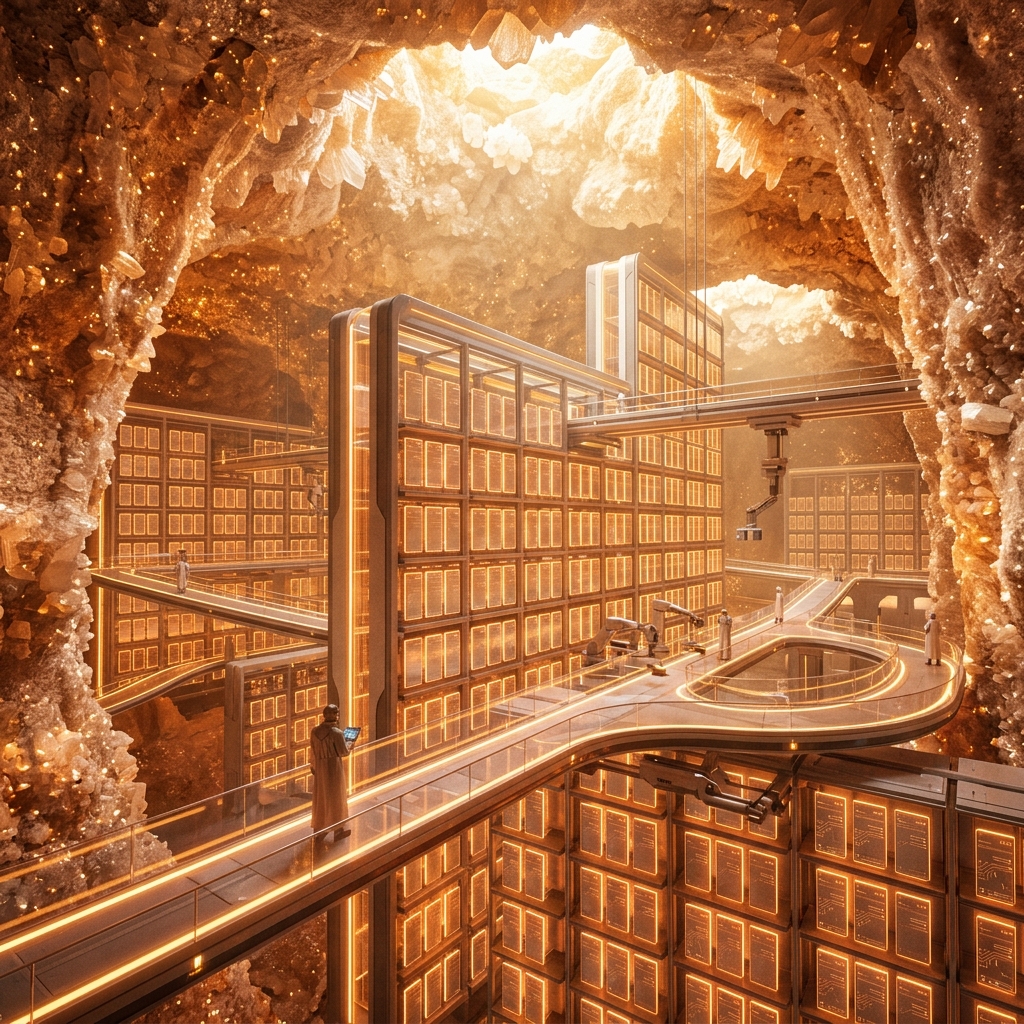
In response to this existential threat, the Austrian ceramicist, scientist, and visionary Martin Kunze initiated an unprecedented worldwide project — Memory of Mankind (MOM). Unfolding deep within the oldest salt mine in Hallstatt, Austria, this initiative is destined to become the greatest time capsule of our era. The project is not merely a technical data backup but a grand philosophical and sociocultural act. Its goal is to preserve the quintessence of human existence, our knowledge, mistakes, daily lives, and dreams for descendants who will inhabit the Earth tens of thousands, or even a million years from now.
The Illusion of Eternity and the Threat of "Digital Alzheimer's"
To fully grasp the scale and timeliness of the Memory of Mankind project, we must first deconstruct the myth of the modern internet's reliability. Popularized by mass culture, the idea that "the internet remembers everything" has taken root in our collective consciousness. However, professional archivists, data specialists, and historians know the terrifying truth: we live in the most fragile archiving era in human history.
George Orwell, in his novel 1984, described a "Memory Hole" — a pneumatic tube leading to an incinerator where inconvenient historical documents were discarded. Today, we voluntarily consign our heritage to a technological memory hole by relying on media that degrades at an alarming rate. A standard Hard Disk Drive (HDD) or Solid State Drive (SSD) in a data center has an average lifespan of 5 to 10 years. Magnetic tapes used for cold storage might last 10 to 25 years under ideal conditions. Optical discs (CDs and DVDs) suffer from reflective layer rot and become unreadable within just a couple of decades.
This phenomenon of rapid data loss has been aptly termed "Digital Alzheimer's" or the onset of the "Digital Dark Age" in academic circles. In this state of electronic dementia, "zero forgets it should be one, and after a while, the entire file structure becomes untranslatable." The UNESCO Vancouver Declaration explicitly points out that the need for specialized hardware and software, compounded by their rapid obsolescence, hinders our ability to preserve priceless content, leading to the risk of global Digital Alzheimer's.
Furthermore, there is an environmental aspect to the problem. The global internet already generates more than 2% of global carbon dioxide emissions, and server farms consume gigantic volumes of electricity. If a global energy crisis or massive natural disasters lead to power outages, cloud storage simply vanishes.
Evolution of Information Carriers: A Comparative Analysis
To understand the depth of the issue, we only need to look at the evolution and degradation of information carriers. The more technological a carrier becomes, the shorter its lifespan.
| Media Type | Period of Active Use | Average Lifespan (Reading Data) | Vulnerabilities and Causes of Data Loss |
|---|---|---|---|
| Magnetic Tape | 1950s — Present | 10 – 25 years | Demagnetization, physical destruction of polymer base, lack of equipment. |
| Optical Discs (CD/DVD) | 1980s — 2010s | 10 – 30 years | Oxidation of the reflective layer, micro-scratches, disappearance of disk drives. |
| Hard Disk Drives (HDD) | 1980s — Present | 5 – 10 years | Mechanical wear of moving parts, demagnetization of platters. |
| Solid State Drives (SSD) | 2000s — Present | Charge retention 5 – 10 years | Charge leakage in memory cells during prolonged storage without power connection. |
| Acid-Free Paper | 19th c. — Present | 200 – 300 years | Fire, water, mold, rodents, gradual degradation of cellulose. |
| Parchment / Vellum | Antiquity — Middle Ages | 500 – 1000+ years | Requires strict storage conditions (humidity, temperature), subject to biological decay. |
| Clay / Ceramic Tablets | 3000 BC — 1st c. AD | 5000+ years | Vulnerable only to direct physical destruction (shattering). Immune to water and time. |
| MOM Ceramic Microfilm | 2012 — Present | 1,000,000+ years | Absolute resistance to water, radiation, acids, and temperatures up to 1500°C. Fragility compensated by storage in a geologically stable environment. |
As the table shows, humanity has paradoxically taken a huge step backward in terms of memory durability. This precise conclusion drove the creators of MOM to synthesize the most ancient approach (ceramics) with the frontiers of modern technology (laser and microfilm printing).
Technological Triumph: From Cuneiform to Ceramic Microfilm
Ceramics have proven their reliability — Sumerian cuneiform tablets have survived for over 5000 years. However, engraving the entire volume of modern civilization's knowledge with a stylus on clay would be impossible due to the physical limitations of the material and the required surface area. Martin Kunze needed an innovative process that combined the strength of ancient clay with the informational density of modern technology.
After years of experimentation, Kunze developed the unique "Ceramic Microfilm" technology and the "Ceramic Color-Stains" printing method. Perfectly flat plates of high-performance ceramics measuring 20 by 20 centimeters serve as the base carrier. This material boasts incredible physical-chemical properties:
- Hardness: The ceramic is as tough as sapphire.
- Heat Resistance: The plates do not melt or warp at temperatures up to 1300–1500°C.
- Chemical Inertness: They are absolutely resistant to water, acids, alkalis, and any aggressive chemicals.
- Radiation Resistance: Unlike magnetic and semiconductor media, ceramic is unaffected by electromagnetic pulses (EMP) or cosmic radiation.
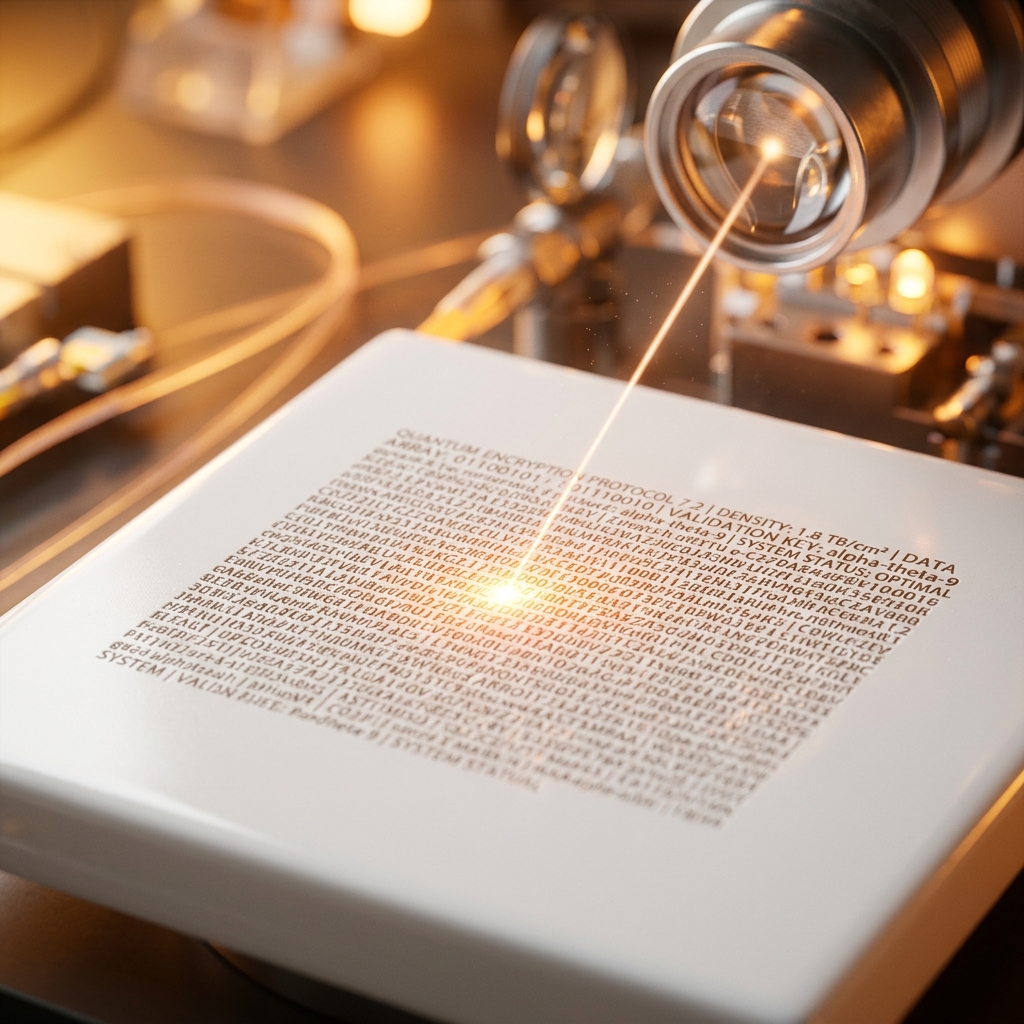
Information inscription happens via two different methods depending on the content type:
- ('ol', 'Ceramic Color-Stains: Used for preserving photographs, graphics, artwork, and complex color illustrations.')
- ('ol', 'Ceramic Microfilm: A breakthrough technology for preserving massive arrays of text and monochrome graphics. Text is scaled down to extremely small sizes — five lines per millimeter. Through collaboration with femtosecond laser companies, digital information is engraved directly onto the ceramic surface with microscopic precision.')
The recording density on the ceramic microfilm is staggering. A single 20x20 cm plate can hold up to 5 million characters. This is equivalent to five books of 400 pages each. For example, the entire seven-volume Harry Potter series can fit on just two such ceramic plates.
A Refuge in the Depths of the Alps: Why Hallstatt?
Creating an indestructible medium is only half the solution. The second half is finding a safe refuge for it. Analyzing these risks, Kunze and geologists formulated strict criteria for the ideal time capsule vault:
- ('ol', 'It must be deep underground to avoid soil erosion and glacial impacts.')
- ('ol', 'It must be unaffected by global sea-level changes.')
- ('ol', 'The surrounding geological structure must not destroy the archive via tectonic shifts.')
- ('ol', 'The refuge must feature a natural self-sealing mechanism within one or two generations.')
- ('ol', 'The surrounding landscape must possess clear landmarks to calculate precise coordinates even hundreds of thousands of years later.')
Astoundingly, the perfect location was found in Kunze's home country — Austria. The Hallstatt salt mine in the Dachstein mountains fully satisfies these stringent requirements. The MOM archive is situated 2,000 meters deep inside Mount Plassen.
This hideaway possesses three unique protective mechanisms:
Ideal Microclimate: Salt actively absorbs any moisture, instantly drying the cave air.
Natural Self-Sealing: Rock salt (halite) under the immense pressure of overlying mountain masses behaves like a viscous, plastic fluid. The salt slowly "creeps," filling any artificial voids at a rate of about 2 centimeters per year. This means that within the next 40–50 years, the gallery where the MOM ceramic boxes are stored will be gently but firmly crushed and filled with solid salt. The archive will seal itself, creating an absolutely waterproof and hermetic sarcophagus.
Return to the Surface: The geodynamics of the Alps dictate that the salt dome, under the pressure of tectonic plates, is gradually being squeezed upwards. According to calculations, in a few hundred thousand years, the salt monolith along with the sealed MOM archive will naturally emerge on the Earth's surface, offering its treasures to the planet's new inhabitants.
The Architecture of Collective Memory: What Does MOM Save?
To bypass censorship and avoid a cultural bias towards the "wealthy West," the creators divided the archive into three independent sections, each with its own methodology:
- ('ol', 'Automated Content: Automatically archives editorials from leading global newspapers to reflect the true public mood without curator bias.')
- ('ol', 'Institutional Content: Universities and science centers use this for academic achievements, raw climate change data, and warnings about nuclear waste burial sites.')
- ('ol', 'Individual Content (Bottom-Up History): Any person on the planet can leave their mark on eternity. Thousands of people send personal diaries, favorite poems, family biographies, and wedding stories.')
Scientists emphasized that recording everyday life — love, food, and mundane joys — is invaluable, as this is precisely what is missing in the study of ancient civilizations.
The Token: A Ceramic Treasure Map for Descendants
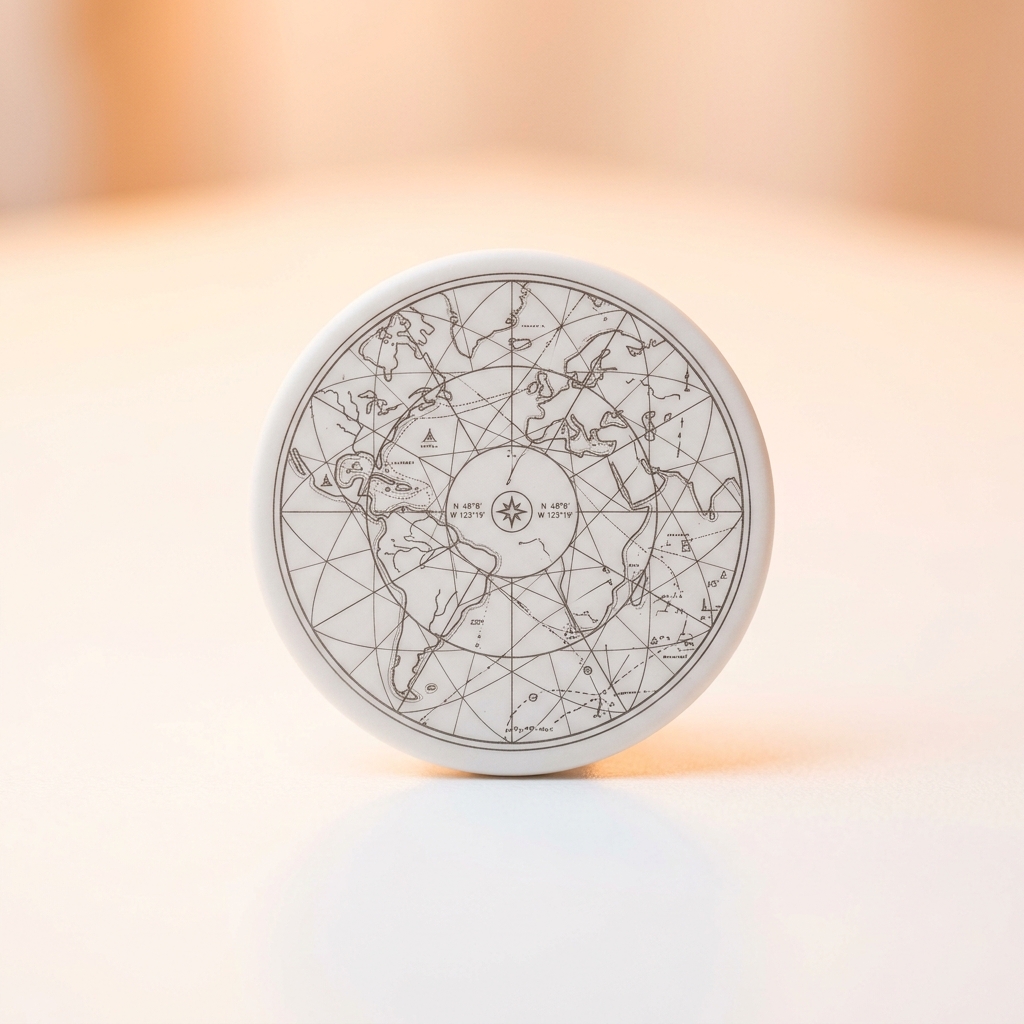
The archive has no "opening date." It is meant to be found only when a new humanity or intelligent civilization reaches a technological level comparable to or surpassing our own. The ideal filter for this is the project's brilliant invention — The MOM Token.
The Token is a small, round disc made of ultra-strong ceramic, approximately 6 centimeters in diameter. It depicts landmarks: continental coastlines, the shape of the alpine Lake Hallstatt, and cross-lines measuring distances between prominent mountain peaks.
To decipher this disc, the "Indiana Jones of the future" will need to overcome complex technological barriers:
- Understanding geological processes and sea-level fluctuations.
- Mastery of thermoluminescence dating to gauge the token's age.
- A global satellite coordinate system.
- Seismic and acoustic probing technologies to find the archive in solid salt.
Memory of Mankind, a brainchild of Martin Kunze, transcends simple archiving. It is an act of deep humanism. When the day comes, future civilizations will find not just ceramic plates, but the living, multi-layered, and immortal memory of humanity.