Archaeology as a scientific discipline has always been directly dependent on the preservation of material evidence. The history of humankind is traditionally divided into ages — Stone, Bronze, Iron — based on the dominant materials capable of surviving centuries in the soil. However, the modern era, increasingly referred to by researchers as the Anthropocene, introduces artifacts into the planet's cultural layer that possess a fundamentally different level of longevity. Among them, titanium occupies a unique position. This metal, discovered at the end of the 18th century and only becoming available for industrial use in the mid-20th century, promises to be the most eloquent witness of our civilization for researchers who will come tens of thousands of years from now.
While iron turns to rust in decades, and organic materials disappear in centuries, titanium products are capable of retaining their shape, structure, and even the information inscribed on them under conditions that would destroy any other structural material. For the future archaeologist, a titanium implant, a fragment of an aircraft engine, or a 3D-printed sculpture will become not just finds, but high-density data archives about the technologies, social hierarchy, and even the individual fates of the people of our era.
The Metallurgy of Eternity: Physicochemical Foundations of Preservation
To understand the role of titanium in future archaeology, it is necessary to analyze the mechanisms of its interaction with the environment. Unlike noble metals such as gold, titanium is a chemically active element. Its exceptional corrosion resistance is due not to the inertness of the metal itself, but to the instant formation of a dense, coherent oxide film on its surface upon its first contact with oxygen or moisture.
The process can be described as follows:
$$Ti + O_2 \rightarrow TiO_2$$
This titanium dioxide film possesses a unique self-healing property. If the surface of the object is subjected to mechanical damage in the cultural layer — for example, due to the shifting of soil layers or the abrasive action of sand — the freshly exposed metal instantly reacts with soil moisture or air, restoring the protective barrier.
Studies show that the thickness of this film at room temperature grows over time according to a logarithmic law. If immediately after exposure it is about $12–16, \text{\AA}$, after four years it reaches $250, \text{\AA}$ and continues to slowly densify over decades.
In the context of archaeological timescales, titanium demonstrates practically zero corrosion rate in most natural environments. While low-carbon steel in soil loses up to $4, \mu m$ of thickness per year, and copper alloys undergo decuprification and patination, titanium remains inert in a pH range from 3 to 12.
Comparative Resistance of Materials in Archaeological Horizons
| Material | Average Corrosion Rate in Soil | Primary Degradation Mechanism | Expected Shape Preservation (years) |
|---|---|---|---|
| Iron (low-carbon) | $2.5 - 4.0, \mu m/\text{year}$ | Uniform oxidation, pitting | $100 - 500$ |
| Bronze (Cu-Sn-Pb) | $0.1 - 1.5, \mu m/\text{year}$ | Selective leaching, chloride corrosion | $1,000 - 5,000$ |
| Stainless Steel | $<0.01, \mu m/\text{year}$ | Pitting corrosion in chlorides | $500 - 2,000$ |
| Titanium (Grade 2, 5) | $\approx 0.00, \mu m/\text{year}$ | Formation of passive $TiO_2$ film | $>100,000$ |
Such stability means that titanium objects entering the cultural layer today will be extracted from it in the future in an "as manufactured" state, preserving their surface microtexture, tool marks, and laser markings.
Bioarchaeological Archive: Implants as Carriers of Identity
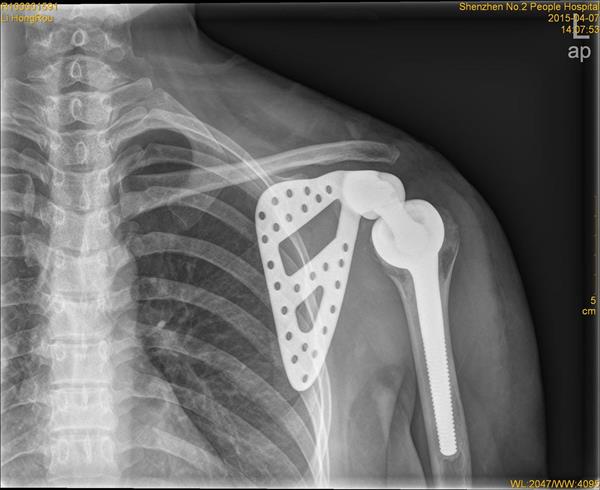
The most significant contribution of titanium to future archaeology will be its mass use in medicine. The discovery of osseointegration by Per-Ingvar Brånemark in 1952 ushered in the era of the "cyborgization" of the human skeleton. Titanium implants — dental screws, hip joints, bone plates, and pacemaker casings — become part of the biological body, effectively forming hybrid remains.
For an archaeologist in the year 5026, a titanium implant will be more valuable than the bone itself, which by then may have completely mineralized or decayed due to soil acidity. Titanium, conversely, will preserve information about the individual's health status, the level of medical care available to them, and their socio-economic status.
Dental Archaeology and Forensic Identification of the Future
Dental implants are the most numerous titanium artifacts in human remains. Unlike traditional amalgam fillings or gold crowns, titanium posts are implanted directly into the jawbone, becoming a structural part of it.
The informational capacity of such an object is colossal:
- Technological Identification: By the thread shape, connection type, and alloy composition (e.g., Ti-6Al-4V or Ti-Zr), it will be possible to determine specific technological schools and the decade of installation.
- Marking and Databases: Modern FDA standards require the application of Unique Device Identifiers (UDI) on implants. These codes, laser-applied via annealing, do not fade or corrode. Even after the complete degradation of soft tissues and bones, these microscopic inscriptions will allow archaeologists (given access to recovered digital archives) to discover the patient’s name, date of birth, and the country where the surgery was performed.
- Social Status: Given the high cost of titanium prosthetics compared to alternatives, the presence of such implants will be a clear marker of belonging to a specific social class.
Durability in Extreme Conditions
Archaeology frequently encounters objects subjected to fire. Research in forensic odontology indicates that titanium implants can withstand temperatures up to $1375,^\circ C$ for 30 minutes without losing their structural integrity and elemental composition. This means that even in the case of intense fires, cremation, or catastrophic volcanic eruptions, titanium evidence will remain intact, allowing for victim identification or the study of burial culture.
| Exposure Parameter | Effect on Bone | Effect on Titanium Implant |
|---|---|---|
| Temperature 800 °C | Calcination, disintegration | Oxide film color change (heat tinting) |
| Temperature 1200 °C | Complete destruction of structure | Preservation of shape and microstructure |
| Soil Acidity (pH 3.5) | Demineralization (dissolution) | Inertness |
| Humid Marine Environment | Corrosion and destruction | Perfect preservation for decades |
The Technosphere and Stratigraphy: Titanium "Technofossils"
The concept of the "cultural layer" in future archaeology will undergo changes. The Anthropocene layer will include objects with no precedent in history. Titanium, being the backbone of the aerospace, defense, and deep-sea industries, will create a specific set of "fossilized" mechanisms.
Aerospace Heritage: Fossils of Supreme Speeds
Titanium became the "metal of the future" due to its ability to retain strength at high temperatures, which is critical for jet engines and supersonic vehicles. The legendary SR-71 Blackbird aircraft, comprised 85% of titanium, exemplifies an object whose fragments could be preserved in geological strata practically forever.
For future archaeologists, titanium aviation components will serve as indicators of:
- The level of materials science development (via the use of Grade 5 or Grade 19 alloys).
- The geography of global conflicts and trade routes.
- The boundaries of human atmospheric expansion (space capsules and rocket fairings).
Deep-Sea Artifacts: Traces in the Abyss
The ocean floor is the most aggressive environment on the planet, where most metals are destroyed by electrochemical corrosion. Titanium, however, possesses absolute resistance to seawater. The hulls of deep submergence vehicles, drilling platforms, and underwater beacons, designed to withstand pressures up to $20,000, \text{psi}$, will become the "Atlantis" of the future. Archaeologists will be able to discover perfectly preserved instruments in bottom sediment layers millions of years from now, enabling exact reconstructions of shelf exploration technologies and deep-ocean mastery.
Additive Art and Digital Fossils
The revolution of 3D metal printing (additive manufacturing) yields a new class of objects that archaeology of the past has never seen. Direct Metal Laser Sintering (DMLS) technologies facilitate the creation of items whose internal structures are just as complex as their external forms.
Sculpture as an Encrypted Algorithm
Contemporary artists, such as Joshua Harker, create titanium sculptures (e.g., "Crania Anatomica Filigre") that manifest as incredibly intricate mathematical fractals. To a future researcher, such a sculpture will be more than mere art; it will be code frozen in metal. Analyzing laser scanning trajectories and micropores will permit the reconstruction of the 3D printer's algorithms, and even the capabilities of our era's computing power.
Unlike ancient bronze statues, which were frequently melted down or suffered from "bronze disease," 3D-printed titanium objects are practically impervious to natural decay. They become "digital fossils" — the physical embodiment of binary code in eternal metal.
Titanium Bridges and Infrastructure
Projects like the 3D-printed MX3D steel bridge in Amsterdam pave the way for entirely titanium infrastructure objects in the future. Integrating the "Digital Twin" concept — where sensors inside a metal structure transmit load data — creates a new form of archaeological monument. Should fragments of such infrastructure be uncovered in the future, archaeologists will be able to study not only its shape but also the dynamic history of the object's operation, recorded in the alterations of the metal's crystal lattice induced by fatigue stress.
Preserving Time: Titanium in the Service of History
Paradoxically, titanium helps to preserve history not solely through its presence, but also directly as an instrument of conservation. The National Institute of Standards and Technology (NIST) chose titanium to construct the new encasements for the "Charters of Freedom" (The Declaration of Independence and the US Constitution).
Sarcophagi for Eternity
The design of these vaults represents the pinnacle of 20th-century engineering:
- Frame Material: Commercially pure titanium with a nickel coating and a thin layer of 24-karat gold for aesthetics.
- Hermetic Seal: The use of argon gas instead of helium and specialized seals guaranteeing the absence of leaks for centuries.
- Monitoring: Embedded pressure and humidity sensors.
For an archaeologist of the distant future, encountering such a "sarcophagus" will mean contact with the most prominent semantic nodes of our civilization. The titanium frames themselves, being virtually immortal, will preserve the documents inside in a state of stasis, fully protecting them from biological degradation and extreme oxidation.
Time Capsules and Monuments
Titanium time capsules buried today significantly surpass steel or copper analogues from previous years. Copper within 1939 capsules can undergo electrochemical corrosion, whereas a Grade 2 titanium container remains anodically passive in almost any soil. Messages deeply engraved into them traversing forth to descendants will become the most durable texts in human history, potentially drastically outliving Egyptian granite hieroglyphics.
List of Landmark Titanium Artifacts for Future Archaeology
To visually comprehend the scale of the "titanium legacy," one can compile a list of objects highly likely to be unearthed during excavations millennia from now:
| Category | Example Object | Information for Future Science |
|---|---|---|
| Medicine | Dental implant with UDI code | Identity, social status, genetic database. |
| Architecture | Guggenheim Museum facade panels | Aesthetic canons of deconstructivism, computational architecture level. |
| Transport | Supercar titanium exhaust | Cult of speed, fossil fuel utilization, materials science. |
| Sports | Golf club head | Leisure culture, human biomechanics of the 21st century. |
| Electronics | iPhone 15/17 Pro casing | Mass consumption, technology miniaturization, global brands. |
| Space | Rocket engine nozzles | Rocket fuel chemistry, drive for interplanetary expansion. |
| Jewelry | Titanium wedding rings | Social institution of marriage, usage of "eternal" symbols. |
The Consumer Layer: Titanium in the Pocket and on the Wrist
In recent years, titanium has ceased to be an exclusive material for the military-industrial complex and space. The transition of titans like Apple and Samsung to utilizing titanium enclosures for their flagship devices (Apple Watch Ultra, iPhone 15/17 Pro) yields a colossal stratum of artifacts within the urban cultural layer.
For a future urban researcher ("urban-archaeologist"), titanium smartphones will become pivotal markers:
- Chronology: Each generation of devices possesses distinct design features. The preservation of the titanium casing will allow precise layer dating down to the exact year.
- Manufacturing Ecology: Analyzing the purity of the titanium and its processing techniques (anodization, laser texturing) will narrate the epoch's supply chains and ecological standards.
- Globalization: Recovering identical titanium enclosures across all continents will supply indisputable proof regarding the global unification of culture and mass consumption stretching throughout the early 21st century.
Titanium in Sports and Everyday Life
Titanium bicycles, golf clubs, and tennis rackets serve as items that, if discarded or lost, maintain their precise form for millennia. A generic steel bicycle frame will perish entirely in the soil within 150 years, leaving solely a lingering rust stain. Encountering a titanium frame 5,000 years hence will reveal a structure appearing exactly as it did upon its date of purchase, yielding a pathway to minutely examine the anthropometry and typical physical conditioning characterizing the humanity of our era.
Conclusion: The New Geology of the Anthropocene
Titanium renders a foundational contribution to the archaeology of the impending future, seamlessly evolving from a mere technological implement into an immortal conduit of rigid information. While we have grown thoroughly habituated to interpreting history as largely fragile and frequently vanishing, titanium firmly establishes a burgeoning "high-definition archaeology."
Vastly owing to its extreme corrosion resistance, its acute capacity for osseointegration, and profound suitability regarding additive manufacturing, titanium actively synthesizes a fundamentally new genre of cultural layer. This uniquely signifies an echelon wherein information avoids being forcibly erased by the immense passage of time. A plain serial number carefully etched upon a solitary dental abutment may inherently convey a deeper narrative than a comprehensive chronicle, and a sculptor’s intricate artistic logic remains statically bound within a pristine metal totally detached from the concept of physical aging.
For generations of approaching researchers, we will effectively leave behind far more than brittle ruins and shattered pottery; we will successfully bequeath the gleaming, remarkably untouched titanium skeletal core heavily underlying our expansive civilization. This directly translates into an unyielding metallic ledger, profoundly testifying towards our concentrated ambition to solidly overcome the fragile constraints binding biology, the surrounding atmosphere, and actively transcend the rigid barrier of enduring time itself. Titanium definitively acts as our profound covenant to the future—sheer material authentication cementing our vital presence, our immense innovative drive, and our resolute pursuit targeting genuine immortality.